We welcome all readers to the 7th issue of the SOTERIA newsletter!We are pleased to announce the publication of the last issue of the SOTERIA newsletter.
Bringing together a strong consortium of 15 mobility and road safety stakeholders across Europe, the Horizon Europe project SOTERIA tackled the challenge of achieving intelligent, inclusive, and safe mobility for all.
Beyond the completion of the project, we remain committed to accelerating progress toward safer and more efficient mobility networks across Europe—with unwavering support from our community of mobility and road safety stakeholders.
With best wishes,
The SOTERIA team |
We welcome all readers to the 7th issue of the SOTERIA newsletter!We are pleased to announce the publication of the last issue of the SOTERIA newsletter.
Bringing together a strong consortium of 15 mobility and road safety stakeholders across Europe, the Horizon Europe project SOTERIA tackled the challenge of achieving intelligent, inclusive, and safe mobility for all.
Beyond the completion of the project, we remain committed to accelerating progress toward safer and more efficient mobility networks across Europe—with unwavering support from our community of mobility and road safety stakeholders.
With best wishes,
The SOTERIA team |
|
|
SOTERIA Final Event
From Living Labs to real world change in European road safety |
SOTERIA Final Event
From Living Labs to real world change in European road safety |
|
|
On 28 April 2026, the SOTERIA project held its Final Event at the University of Deusto in Bilbao, bringing together researchers, city authorities, technology providers, and road safety experts to demonstrate how data‑driven innovation can improve safety for Vulnerable Road Users (VRUs) across Europe. Under the theme “From Living Labs to real‑world change”, the event showcased SOTERIA’s journey from co‑creation and experimentation to pilot‑ready solutions and policy‑relevant outcomes. The morning sessions focused on VRU behaviour and needs, highlighting how community co‑creation, behavioural research, and virtual‑reality‑based safety training contribute to more inclusive and trusted mobility solutions. Speakers stressed the importance of embedding VRU perspectives intolocal mobility strategies and policies. Later sessions presented SOTERIA’s data‑driven road safety intelligence, including theSafe Mobility Data Space, AI‑based risk prediction models, and explainable AI approaches that support transparent, evidence‑based decision‑making. The event also featured deployable technologies such as on‑vehicle sensing for micromobility, AI‑enhanced hazard detection, safety‑weighted and pollution‑aware routing, and the SOTERIA mobile app, forming an integrated safety ecosystem ready for scale‑up. A dedicated panel discussion on deploying a connected VRU safety stack in European cities brought together SOTERIA partners from the University of Deusto, who moderated the session, and DEKRA, alongside experts from Ingratek (representing the iDriving project), Tecnalia, and ASIMOB. The discussion emphasised the importance of cross‑sector collaboration, interoperability, and close alignment between innovation, regulation, and city operations. We warmly thank the University of Deusto for hosting the event, the Netcompany RID department for organising the programme, and all speakers and participants for their insightful contributions and engaging discussions. The Final Event concluded with a clear message: SOTERIA has laid the foundations for personalised, proactive, and explainable road safety, supporting Europe’s Vision Zero 2050 ambition. |
On 28 April 2026, the SOTERIA project held its Final Event at the University of Deusto in Bilbao, bringing together researchers, city authorities, technology providers, and road safety experts to demonstrate how data‑driven innovation can improve safety for Vulnerable Road Users (VRUs) across Europe. Under the theme “From Living Labs to real‑world change”, the event showcased SOTERIA’s journey from co‑creation and experimentation to pilot‑ready solutions and policy‑relevant outcomes. The morning sessions focused on VRU behaviour and needs, highlighting how community co‑creation, behavioural research, and virtual‑reality‑based safety training contribute to more inclusive and trusted mobility solutions. Speakers stressed the importance of embedding VRU perspectives intolocal mobility strategies and policies. Later sessions presented SOTERIA’s data‑driven road safety intelligence, including theSafe Mobility Data Space, AI‑based risk prediction models, and explainable AI approaches that support transparent, evidence‑based decision‑making. The event also featured deployable technologies such as on‑vehicle sensing for micromobility, AI‑enhanced hazard detection, safety‑weighted and pollution‑aware routing, and the SOTERIA mobile app, forming an integrated safety ecosystem ready for scale‑up. A dedicated panel discussion on deploying a connected VRU safety stack in European cities brought together SOTERIA partners from the University of Deusto, who moderated the session, and DEKRA, alongside experts from Ingratek (representing the iDriving project), Tecnalia, and ASIMOB. The discussion emphasised the importance of cross‑sector collaboration, interoperability, and close alignment between innovation, regulation, and city operations. We warmly thank the University of Deusto for hosting the event, the Netcompany RID department for organising the programme, and all speakers and participants for their insightful contributions and engaging discussions. The Final Event concluded with a clear message: SOTERIA has laid the foundations for personalised, proactive, and explainable road safety, supporting Europe’s Vision Zero 2050 ambition. |
|
|
How can cities protect pedestrians, cyclists, and micromobility users in a rapidly changing mobility landscape? 🎬 Watch the final SOTERIA video, created with the support of the EC Booster services and depicting the key solutions and results of the project! ➡️ Click on the snapshot below or here. |
How can cities protect pedestrians, cyclists, and micromobility users in a rapidly changing mobility landscape? 🎬 Watch the final SOTERIA video, created with the support of the EC Booster services and depicting the key solutions and results of the project! ➡️ Click on the snapshot below or here. |
|
|
SOTERIA sets out a clear policy roadmap to protect vulnerable road users in European cities |
SOTERIA sets out a clear policy roadmap to protect vulnerable road users in European cities |
|
|
As European cities face growing pressure to accommodate new forms of mobility while protecting their most vulnerable citizens, the SOTERIA Horizon Europe project has released a comprehensive set of policy recommendations designed to significantly improve road safety for VRUs — including pedestrians, cyclists, micromobility users, older people, children, and people with disabilities.
The recommendations reflect lessons learned from real-world Living Lab demonstrations, extensive stakeholder consultations, and alignment with EU and international road safety frameworks. Together, they offer a practical and actionable policy roadmap to help policymakers accelerate the deployment of innovative, inclusive, and effective road safety solutions in urban environments — and to move closer to the EU’s Vision Zero objective of eliminating road fatalities by 2050.
📄 Read the full press release here. |
As European cities face growing pressure to accommodate new forms of mobility while protecting their most vulnerable citizens, the SOTERIA Horizon Europe project has released a comprehensive set of policy recommendations designed to significantly improve road safety for VRUs — including pedestrians, cyclists, micromobility users, older people, children, and people with disabilities.
The recommendations reflect lessons learned from real-world Living Lab demonstrations, extensive stakeholder consultations, and alignment with EU and international road safety frameworks. Together, they offer a practical and actionable policy roadmap to help policymakers accelerate the deployment of innovative, inclusive, and effective road safety solutions in urban environments — and to move closer to the EU’s Vision Zero objective of eliminating road fatalities by 2050.
📄 Read the full press release here. |
 |
SOTERIA translates the Vision Zero ambition into practical policy recommendations, supporting cities and decision‑makers in designing safer and more inclusive mobility systems for all road users. Discover our new infographic, which turns SOTERIA’s policy recommendations into a clear journey towards safer roads. ➡️Download it here |
SOTERIA translates the Vision Zero ambition into practical policy recommendations, supporting cities and decision‑makers in designing safer and more inclusive mobility systems for all road users. Discover our new infographic, which turns SOTERIA’s policy recommendations into a clear journey towards safer roads. ➡️Download it here |
SOTERIA contributes policy recommendations to EGRIS discussions |
SOTERIA contributes policy recommendations to EGRIS discussions |
SOTERIA policy recommendations were recently presented at theExpert Group on Road Infrastructure Safety (EGRIS) Sub-Group 3 meeting on 6 May 2026.
Participation in the meeting provided an opportunity to engage directly with experts and stakeholders, gathering valuable feedback and contributing to ongoing discussions on safer and more inclusive road infrastructure for vulnerable road users.
Building on its integrated approach — combining data, AI-driven analytics, and co-creation activities — SOTERIA provided evidence-based recommendations supporting improved urban safety, infrastructure design, and policy development. The project’s contributions feed directly into the development of European guidance on“forgiving roadsides” and “self-explaining and self-enforcing roads”, reinforcing the importance of user-centric and data-driven approaches to road safety. 🔜 The full set of SOTERIA policy recommendations will be published soon. Stay tuned for further updates. |
SOTERIA policy recommendations were recently presented at theExpert Group on Road Infrastructure Safety (EGRIS) Sub-Group 3 meeting on 6 May 2026.
Participation in the meeting provided an opportunity to engage directly with experts and stakeholders, gathering valuable feedback and contributing to ongoing discussions on safer and more inclusive road infrastructure for vulnerable road users.
Building on its integrated approach — combining data, AI-driven analytics, and co-creation activities — SOTERIA provided evidence-based recommendations supporting improved urban safety, infrastructure design, and policy development. The project’s contributions feed directly into the development of European guidance on“forgiving roadsides” and “self-explaining and self-enforcing roads”, reinforcing the importance of user-centric and data-driven approaches to road safety. 🔜 The full set of SOTERIA policy recommendations will be published soon. Stay tuned for further updates. |
|
|
SOTERIA Urban Road Safety Expert Workshop
Parallel event at the 8th IRTAD International Conference 2026 |
SOTERIA Urban Road Safety Expert Workshop
Parallel event at the 8th IRTAD International Conference 2026 |
|
|
 |
On 15 April 2026, the SOTERIA project successfully hosted its Urban Road Safety Expert Workshop in Athens, as a side event of the IRTAD International Conference 2026. The session brought together experts, researchers, and practitioners to explore how data-driven approaches can enhance road safety in complex urban environments. With a strong focus on VRUs, the workshop highlighted how behavioural insights, sensor data, and advanced analytics can support more effective, evidence-based safety interventions. An overview of the SOTERIA framework set the scene, showcasing key results and the role of stakeholders in shaping the project’s solutions. Participants gained insights into SOTERIA’s innovative tools, including urban safety intelligence solutions, data analytics for safe routing and travel demand modelling, and findings from the Greek Living Lab. A live demonstration of the SOTERIA mobile app further illustrated how real-time alerts and behavioural nudges can support safer mobility in practice. In addition to the workshop, the appl was also presented during a poster session at the main conference. The workshop also featured contributions from other EU-funded projects. CHORUS presented its approach to safer coordination of mixed traffic, while EVENTS addressed improved perception and decision-making for automated vehicles in challenging conditions. Organised in parallel with the PHOEBE workshop, the session concluded with a joint wrap-up, highlighting key takeaways and future collaboration opportunities. Overall, the workshop provided a valuable platform for exchange and reinforced the importance of collaboration, data, and innovation in advancing the Vision Zero ambition and creating safer urban environments for all. Grateful to the International Transport Forum at OECD, the National Technical University of Athens, and the Hellenic Institute of Transportation Engineers for the opportunity to exchange knowledge and best practices towards safe, inclusive, trustworthy, and road user-centric mobility for all! |
On 15 April 2026, the SOTERIA project successfully hosted its Urban Road Safety Expert Workshop in Athens, as a side event of the IRTAD International Conference 2026. The session brought together experts, researchers, and practitioners to explore how data-driven approaches can enhance road safety in complex urban environments. With a strong focus on VRUs, the workshop highlighted how behavioural insights, sensor data, and advanced analytics can support more effective, evidence-based safety interventions. An overview of the SOTERIA framework set the scene, showcasing key results and the role of stakeholders in shaping the project’s solutions. Participants gained insights into SOTERIA’s innovative tools, including urban safety intelligence solutions, data analytics for safe routing and travel demand modelling, and findings from the Greek Living Lab. A live demonstration of the SOTERIA mobile app further illustrated how real-time alerts and behavioural nudges can support safer mobility in practice. In addition to the workshop, the appl was also presented during a poster session at the main conference. The workshop also featured contributions from other EU-funded projects. CHORUS presented its approach to safer coordination of mixed traffic, while EVENTS addressed improved perception and decision-making for automated vehicles in challenging conditions. Organised in parallel with the PHOEBE workshop, the session concluded with a joint wrap-up, highlighting key takeaways and future collaboration opportunities. Overall, the workshop provided a valuable platform for exchange and reinforced the importance of collaboration, data, and innovation in advancing the Vision Zero ambition and creating safer urban environments for all. Grateful to the International Transport Forum at OECD, the National Technical University of Athens, and the Hellenic Institute of Transportation Engineers for the opportunity to exchange knowledge and best practices towards safe, inclusive, trustworthy, and road user-centric mobility for all! |
SOTERIA at TRA2026
Contributing to advances in transport safety |
SOTERIA at TRA2026
Contributing to advances in transport safety |
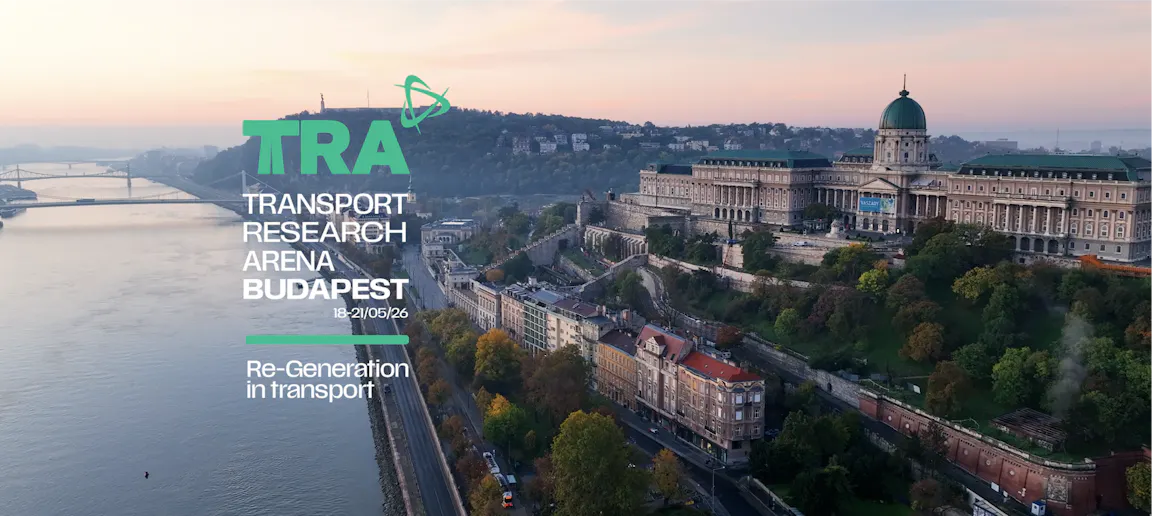 |
SOTERIA was represented at the Transport Research Arena (TRA) 2026, Europe’s largest transport and mobility research and innovation conference, contributing to key discussions on transport safety and data‑driven approaches to urban road safety. TRA 2026 took place on18-21 May in Budapest, Hungary. Through both technical sessions and poster presentations, SOTERIA partners presented research results and tools developed within the project, showcasing how the integration of traffic data, connected vehicle information, and advanced analytics can support safer urban mobility for all road users. 📍 SOTERIA contribution in the TRA2026 scientific programme 📅 18 May 2026 – Technical Session 1
Accident Analysis for Enhanced Safety (Transport Safety)
08:45–10:15 | Room F7 - Enhancing Urban Road Safety: Integrating Traffic Density, Connected Vehicle Data, and Crash Analysis
Presenter: Jon Díaz‑Aparicio (University of Deusto)
📌 Poster presentation Transport Safety | Room H1 - Micro‑mobility Safety Services: Hazard Detection and Speed Regulation
Presenter: Panagiotis Georgakis (University of Wolverhampton)
SOTERIA’s presence at TRA2026 highlights the project’s contribution to advancing evidence‑based transport safety solutions, supporting cities and policymakers in addressing road safety challenges through innovation and data‑driven decision‑making. For more information, visit the conference website:
👉 https://traconference.eu |
SOTERIA was represented at the Transport Research Arena (TRA) 2026, Europe’s largest transport and mobility research and innovation conference, contributing to key discussions on transport safety and data‑driven approaches to urban road safety. TRA 2026 took place on18-21 May in Budapest, Hungary. Through both technical sessions and poster presentations, SOTERIA partners presented research results and tools developed within the project, showcasing how the integration of traffic data, connected vehicle information, and advanced analytics can support safer urban mobility for all road users. 📍 SOTERIA contribution in the TRA2026 scientific programme 📅 18 May 2026 – Technical Session 1
Accident Analysis for Enhanced Safety (Transport Safety)
08:45–10:15 | Room F7 - Enhancing Urban Road Safety: Integrating Traffic Density, Connected Vehicle Data, and Crash Analysis
Presenter: Jon Díaz‑Aparicio (University of Deusto)
📌 Poster presentation Transport Safety | Room H1 - Micro‑mobility Safety Services: Hazard Detection and Speed Regulation
Presenter: Panagiotis Georgakis (University of Wolverhampton)
SOTERIA’s presence at TRA2026 highlights the project’s contribution to advancing evidence‑based transport safety solutions, supporting cities and policymakers in addressing road safety challenges through innovation and data‑driven decision‑making. For more information, visit the conference website:
👉 https://traconference.eu |
|
|
Insights from our Living Labs |
Insights from our Living Labs |
|
|
| What if virtual reality could help adolescents understand traffic dangers before an accident happens? In Saxony, Germany, the SOTERIA project is combining immersive VR technology with a smart routing app to protect young road users. Read more |
What if virtual reality could help adolescents understand traffic dangers before an accident happens? In Saxony, Germany, the SOTERIA project is combining immersive VR technology with a smart routing app to protect young road users. Read more |
|
|
| Most road safety planning relies on collision records: incidents serious enough to involve the police or an ambulance. This is essential data, but it only captures the worst outcomes. The near misses, the obstructed cycle lanes, the junctions that could be improved but haven't seriously hurt anyone yet don’t appear any one centralized dataset, until now. Read more |
Most road safety planning relies on collision records: incidents serious enough to involve the police or an ambulance. This is essential data, but it only captures the worst outcomes. The near misses, the obstructed cycle lanes, the junctions that could be improved but haven't seriously hurt anyone yet don’t appear any one centralized dataset, until now. Read more |
|
|
| What if your daily commute could help prevent the next road accident? In Greece, the SOTERIA project has moved from a bold idea to a proven reality, transforming everyday routes in Chania and Igoumenitsa into data-rich road safety laboratories. Read more |
What if your daily commute could help prevent the next road accident? In Greece, the SOTERIA project has moved from a bold idea to a proven reality, transforming everyday routes in Chania and Igoumenitsa into data-rich road safety laboratories. Read more |
|
|
| As part of the SOTERIA project, Nommon, the University of Deusto and SWARCO have developed a prototype tool that harnesses new data sources to enable more proactive road safety analysis. The tool is designed to support road authorities and safety practitioners in identifying and prioritising high‑risk locations. Tested in the Madrid Living Lab in collaboration with the local police, the tool has been validated in a real operational environment. Read more |
As part of the SOTERIA project, Nommon, the University of Deusto and SWARCO have developed a prototype tool that harnesses new data sources to enable more proactive road safety analysis. The tool is designed to support road authorities and safety practitioners in identifying and prioritising high‑risk locations. Tested in the Madrid Living Lab in collaboration with the local police, the tool has been validated in a real operational environment. Read more |
|
|
SOTERIA brings together four outstanding scientific research institutions, four leading road safety solutions providers, three policy makers and city stakeholders and four cutting-edge technology providers from Belgium, France, Germany, Greece, Luxembourg, Spain, and the United Kingdom, to pave the way towards road safety and sustainable micromobility. |
SOTERIA brings together four outstanding scientific research institutions, four leading road safety solutions providers, three policy makers and city stakeholders and four cutting-edge technology providers from Belgium, France, Germany, Greece, Luxembourg, Spain, and the United Kingdom, to pave the way towards road safety and sustainable micromobility. |
|
|
Follow us to stay tuned with the SOTERIA project! |
Follow us to stay tuned with the SOTERIA project! |
|
|
|
|


